Process
From quote to switch-on in four steps
Going solar is simpler than you think. Here is the typical journey from your first estimate to generating your own clean energy.
Share your home details
- •Roof type and location
- •Your energy use
- •What you want
Get an independent estimate
- •Tailored system design
- •Honest savings forecast
- •No obligation
Compare vetted installers
- •Certified professionals
- •Transparent quotes
- •Installers across Europe
Install and start saving
- •Permits handled for you
- •Up and running in weeks
- •Lower bills from day one
Good to know
Common questions about solar
The things people ask most before going solar, answered plainly with the numbers.
When solar produces over the year
Typical share of a year's output by month in the Nordic climate. Production is concentrated in spring and summer; winter is short and low.
Do solar panels work in winter and cloudy weather?
Yes. Panels run on daylight, not direct sun, so they still produce on grey days, just less. In the Nordics winter output is small because the days are short and the sun sits low: December to February together make only about 5 to 8% of the year's yield. Cold itself helps a little, as panels are slightly more efficient when cool.
Which way should the roof face, and at what angle?
A south-facing roof gives the most at our latitudes, with a tilt of about 30 to 45 degrees ideal. East- and west-facing roofs still work well, usually 10 to 20% below south, and a low-pitch east/west split spreads production more evenly across the day.
How much electricity does a system make?
Plan on roughly 800 to 1,000 kWh a year for every kWp installed in the Nordic climate. A common 6 kWp home array therefore makes around 5,000 to 6,000 kWh a year, peaking in May and June. Orientation, tilt, shade and weather all move the number.
How long do panels last, and do they fade?
Panels usually carry a 25-year performance warranty and keep going well beyond it. They fade slowly, about 0.3 to 0.5% a year, so a panel still makes roughly 85 to 90% of its original output after 25 years. The inverter is the part most likely to need replacing once, after 10 to 20 years.
How much upkeep do they need?
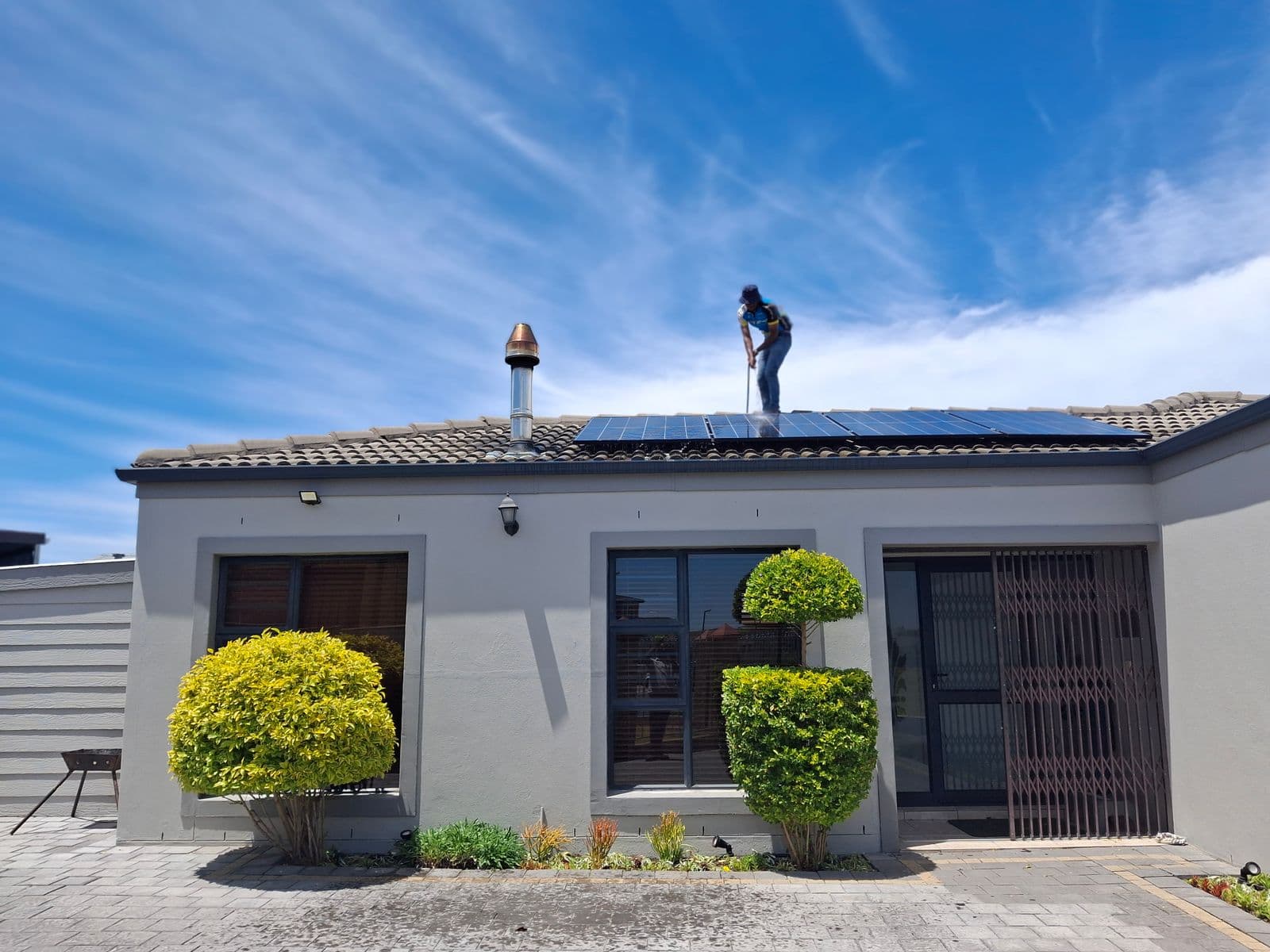
Very little. With no moving parts they are nearly maintenance-free, and rain keeps them largely self-cleaning on any roof steeper than about 15 degrees. An occasional rinse once or twice a year covers most homes.
Do I need a battery?
No, it is optional. Without one, power you do not use right away is exported to the grid automatically. A battery stores that surplus so you can use it in the evening or sell it when prices are high, which lifts your self-consumption, but it adds real cost and is not required to benefit from solar.
Can I sell the surplus to the grid?
Yes. New systems are paid for the power they export, at around the spot price minus grid tariffs. Because that is much less than the retail price you avoid by using your own power, it pays to size the array to your home's use rather than oversize it to sell.
Can I charge an electric car with solar?
Yes, and they suit each other. A smart charger ramps charging up and down to follow your surplus production, so the car soaks up your own power. Around 3 to 3.5 kWp of panels covers a typical car's yearly driving, though much charging happens at night, so a battery or smart tariff helps bridge the gap.
Do panels raise my home's value?
Generally yes. Solar can lift the home's energy rating, and buyers value lower running costs, so homes with panels tend to sell for more. Danish data points to around 3% on the sale price on average. The exact effect depends on the system's size, age and condition.
What is the environmental impact?
Panels repay the energy and emissions used to build them in about 4 to 8 months, after which the power is effectively emission-free for decades. A typical home avoids on the order of 600 kg of CO2 a year, and modern panels are highly recyclable at end of life.
How long does it take to install?
Mounting a typical home system takes about 1 to 3 days, with tiled roofs at the slower end. The electrical hook-up is a few hours for an authorised electrician. After that, registering the system with the grid usually adds a couple of weeks before everything is live.

See what solar could save you
Get your personalised estimate in under a minute. Free, with no obligation.
Calculate my savings